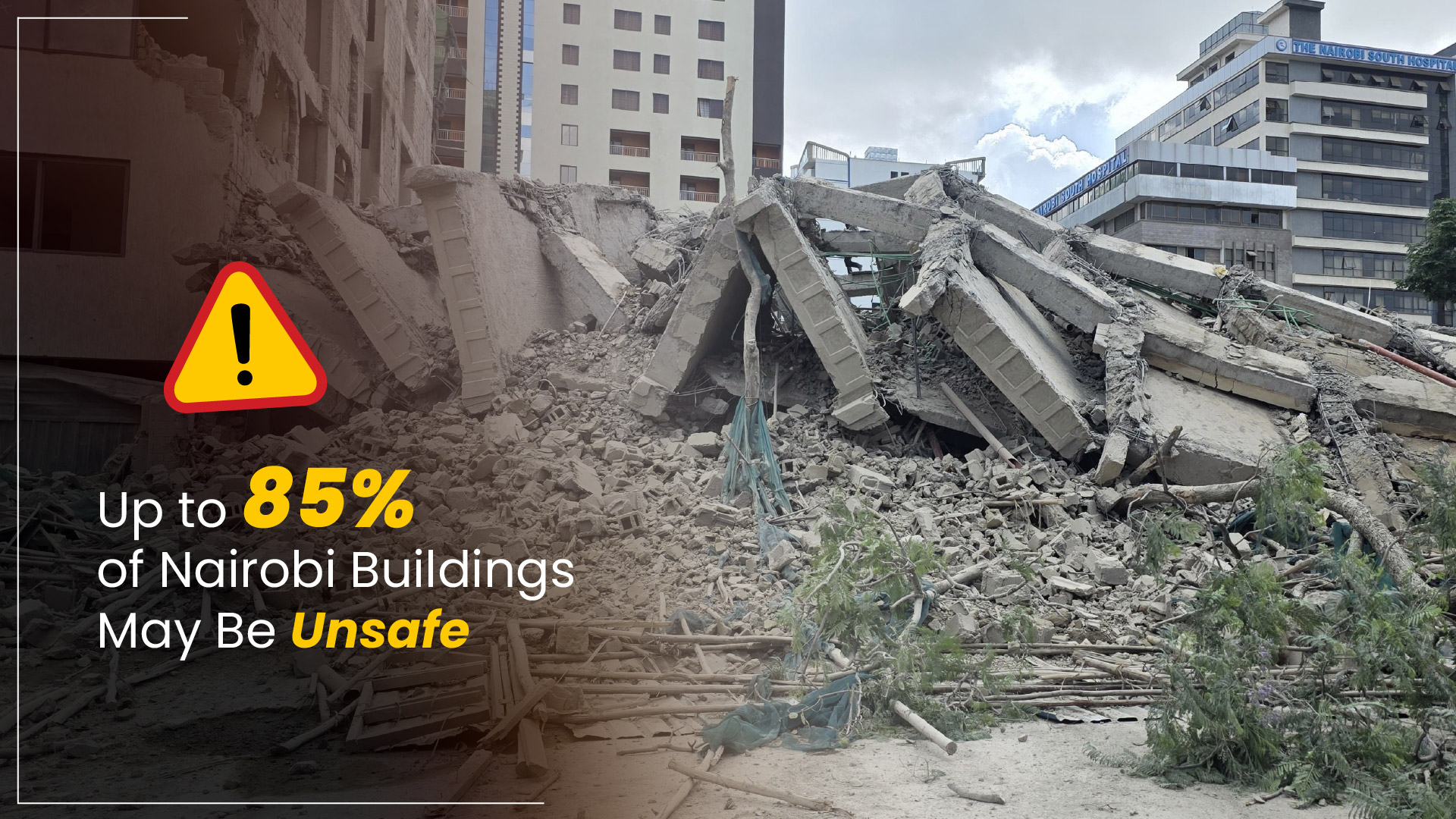
The recent collapse of a multi-storey building under construction in South C has once again placed Nairobi’s built environment under sharp scrutiny. What should have symbolized urban progress instead exposed the consequences of compromised standards, weak enforcement and systemic failures within the construction and real estate sector.
In the aftermath of the incident, built-environment professionals issued an alarming warning; as many as 85 percent of buildings in Nairobi may be structurally unsafe. This revelation underscores a reality that industry experts have cautioned against for years, that the city’s rapid vertical expansion has not always been matched with rigorous professional oversight, strict compliance and a culture of accountability. While Nairobi’s skyline continues to expand in response to population growth and demand for modern housing and commercial spaces, many existing buildings fail to meet essential safety thresholds, placing occupants, investors and the public at risk. The problem is not aesthetic, but structural.
George Ndege, President of the Architectural Association of Kenya (AAK), has been unequivocal in his assessment, warning that many buildings are standing “by grace.” He notes that even a mild tremor could result in catastrophic failure where foundations and load-bearing systems were compromised at the design or construction stage. His message is clear: building collapses are not accidents, but predictable outcomes of sidelining professional expertise and ignoring technical standards.
The causes of this crisis run throughout the development chain. Projects often proceed without adequate soil testing, proper structural design or continuous involvement of qualified professionals, highlighting the importance of complying with Kenya's construction standards. Approved plans are altered during construction and additional floors are added without recalculating load capacities and substandard materials are introduced to reduce costs. Each deviation incrementally weakens a structure, often invisibly, until failure becomes inevitable.
Governance failures have compounded these risks. Despite existing regulations, enforcement remains inconsistent due to corruption, political interference and overstretched inspection systems, while changes to Nairobi's building approval process continue to shape the regulatory environment. In some cases, developers act as their own contractors, eliminating critical checks and balances that safeguard structural integrity and public safety.
For buyers and investors, this reality demands a fundamental shift in priorities, when considering real estate investment in Kenya. Location, finishes and pricing can no longer be the sole measures of value. Structural soundness, professional supervision and compliance documentation must take precedence, as a visually appealing property holds little value if its safety is uncertain. Thorough due diligence including verification of approvals, structural reports and independent inspections is now essential.
Developers must also reckon with the long-term consequences of cutting corners. Short-term cost savings often result in severe legal, financial and reputational damage, while placing lives at risk. Sustainable real estate development is not simply about delivering units, but about embedding resilience, trust and longevity into every structure.
For regulators and policymakers, the South C collapse should mark a decisive turning point. Strengthening inspection regimes, empowering technical professionals and protecting approval systems from manipulation are urgent priorities, as the built environment directly affects public safety, investor confidence and economic stability.
Ultimately, restoring confidence in Nairobi’s real estate sector requires discernment rather than assurances. Safety is rarely visible in finishes or marketing materials; it is found in structural drawings, compliance certificates, material test reports and consistent professional supervision. As the city continues to grow, the true measure of value must remain clear; buildings that endure are those built correctly, with integrity and accountability at their core.